

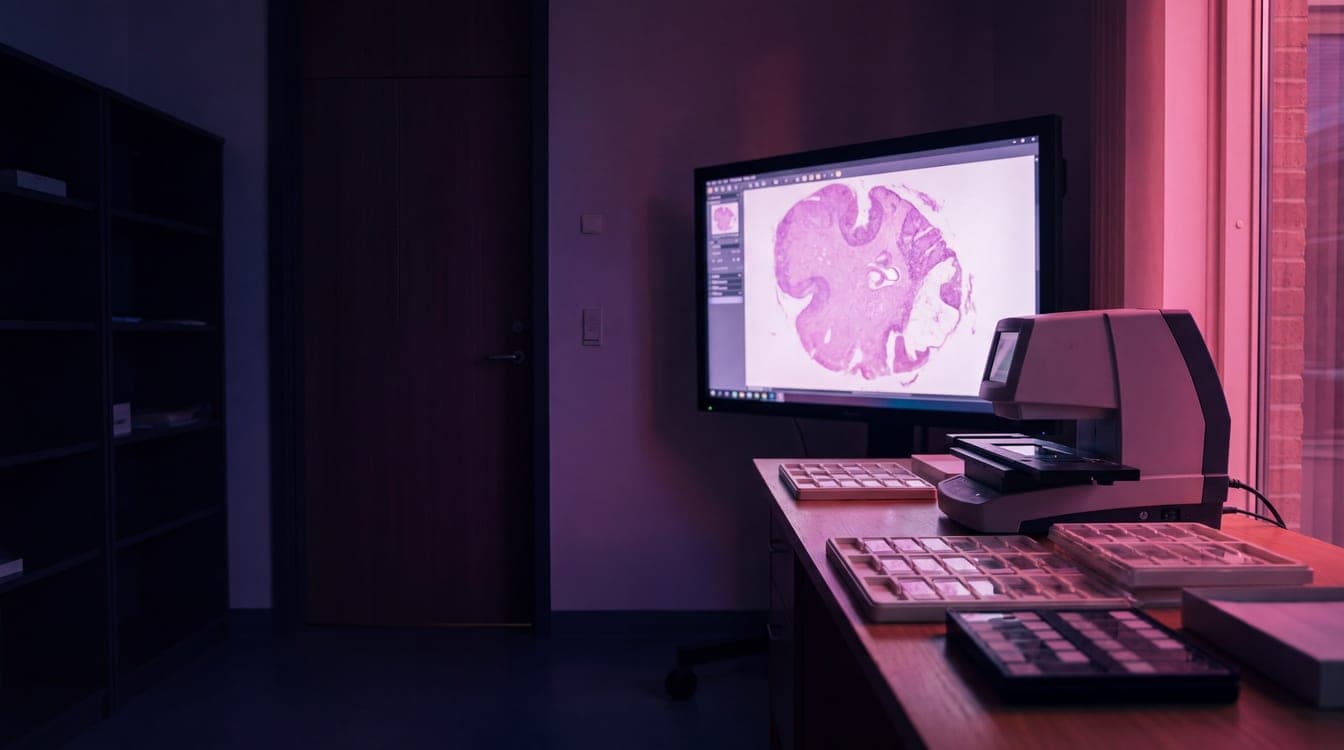
Every slide, with diagnosis and outcome.
Whole slide images held in the patient's record, viewed and annotated beside the diagnosis, molecular results, and follow-up.
A digital pathology archive for research keeps whole slide images useful after the diagnosis is made.
In the data hub, each slide sits beside the diagnosis, molecular results, and outcome, so a research cohort comes with its clinical facts.
Slides apart from outcomes answer nothing.
Slide archives often hold images without the diagnosis, treatment, and outcome that give them research value.
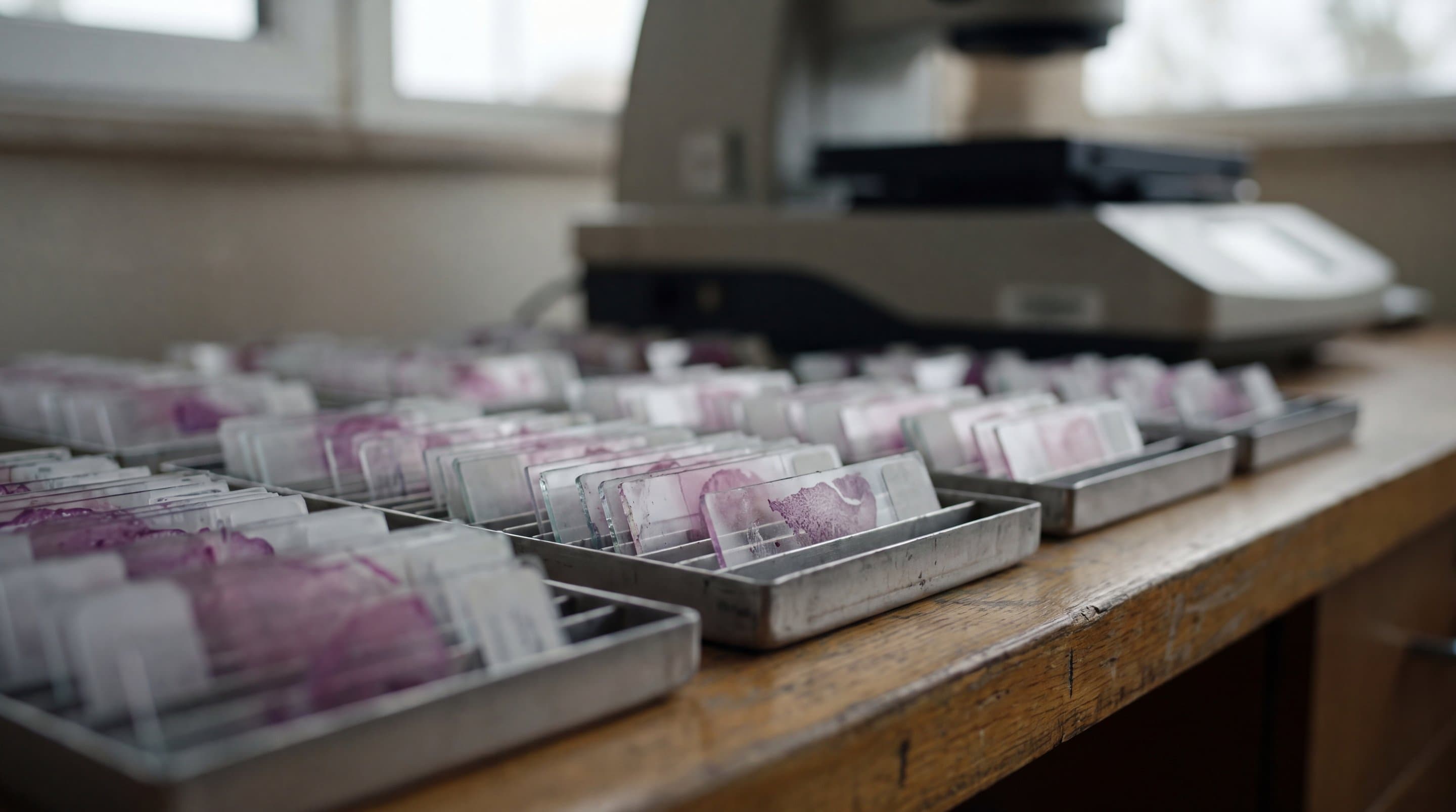
- Whole slide images viewed and annotated in the record
- Diagnosis, molecular results, and outcome beside each slide
- Coded to international classifications at capture
- Anonymised releases of slides and data, every release logged
How a slide moves through the archive.
- Slide scanned
- Held in record
- Annotated
- Cohort assembled
- Anonymised release
A national paediatric oncology register runs on this software today.
Questions pathology leads ask.
Which image types does it hold?
Radiology images in DICOM and whole slide pathology images, each stored in the record it belongs to.
Can we build research sets from the archive?
Yes. The archive assembles annotated slides with their clinical facts and releases them in anonymised form for your research team's own tools.
Is this example a customer deployment?
No. It shows how a hospital would use capabilities that run today in a national paediatric oncology register on the platform.
Put your slides back with their records.
Book a call about your pathology archive, and invite your DPO, IT, and quality leads.